
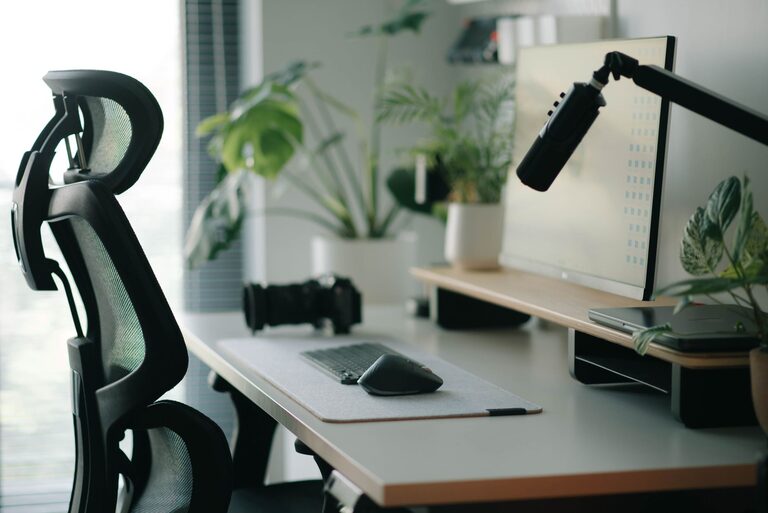
Creating a workspace that supports both focus and comfort is essential whether you’re working from home, at the office, or studying. A well-designed desk setup can minimize distractions, prevent physical discomfort, and boost your productivity throughout the day. In this post, we’ll explore practical tips and ideas to help you optimize your desk environment for better concentration and comfort.
Why Your Desk Setup Matters
Your desk setup directly affects how you feel and perform during work or study sessions. An uncomfortable chair or a cluttered workspace can lead to fatigue and decreased focus. On the other hand, a thoughtfully arranged desk can reduce strain on your body, keep distractions at bay, and create a space that encourages sustained attention and creativity.
Key Elements of a Focus-Boosting Desk Setup
1. Choose the Right Desk and Chair
– Ergonomic Chair: Select a chair with adjustable height, lumbar support, and comfortable padding. Good back support helps prevent posture-related pain.
– Desk Height: Your desk should allow your forearms to rest parallel to the floor when typing. If your desk is fixed, an adjustable chair or footrest can help you maintain the right posture.
2. Optimize Monitor Position
– Place your monitor directly in front of you, about an arm’s length away.
– The top of the screen should be at or just below eye level. This helps avoid neck strain.
– If you use a laptop, consider a laptop stand and an external keyboard and mouse for better ergonomics.
3. Declutter and Organize
– Keep your desk surface clean and only have essential items within reach.
– Use cable organizers to manage cords and reduce visual distractions.
– Consider desk organizers or drawers for storing stationery, documents, and gadgets.
Tips to Enhance Comfort
1. Maintain Proper Lighting
– Use natural light whenever possible, positioning your desk near a window without direct glare on your screen.
– Combine overhead lighting with a desk lamp to reduce eye strain.
– Choose a lamp with adjustable brightness or color temperature for different times of day.
2. Personalize Your Space
– Add a few personal touches like a small plant, photo, or artwork to create a pleasant atmosphere.
– Avoid overcrowding your desk; select only a few meaningful items that make you feel comfortable and motivated.
3. Take Care of Your Body
– Include ergonomic accessories such as a wrist rest for keyboard and mouse use.
– Use a footrest if your feet don’t comfortably reach the floor.
– Remember to take breaks, stretch, and change positions throughout the day.
Setting Up for Focus
1. Minimize Distractions
– Position your desk away from busy areas or noisy spots if possible.
– Use noise-canceling headphones or white noise apps if background sounds are unavoidable.
– Limit digital distractions by using tools to block distracting websites during work sessions.
2. Keep Essential Tools Handy
– Arrange frequently used items like pens, notebooks, and headphones within easy reach.
– Use a planner or to-do list on your desk to track priorities and reduce mental clutter.
3. Maintain a Consistent Routine
– Keep your workspace dedicated to work or study only, helping your brain associate the desk with focus.
– Develop a morning setup ritual, such as tidying your desk, reviewing tasks, or stretching briefly before starting.
Additional Ideas for a Comfortable Desk Setup
– Ergonomic Keyboard and Mouse: Investing in ergonomically designed devices can reduce strain on your wrists and hands.
– Adjustable Standing Desk: Alternating between sitting and standing encourages movement and reduces fatigue.
– Cable Management Solutions: Using clips, sleeves, or trays to organize cables keeps your desk neat and hazards minimal.
– Monitor Arm: Attaching your monitor to an adjustable arm provides flexibility in positioning and frees up desk space.
Final Thoughts
Designing a desk setup that balances focus and comfort doesn’t have to be complicated or expensive. By paying attention to ergonomics, organization, lighting, and personalization, you can create a workspace that makes it easier to stay attentive and reduces physical strain. Small changes can make a significant difference in your productivity and well-being. Start with a few adjustments, and gradually tailor your setup to what works best for you.
Remember, your desk should work for you—not the other way around. Happy organizing!